
Nobody hands families a list like this. The programs below are real, they are running right now, and most families learn about them years late or not at all. Each one gets a short, plain explanation here and a link to the page that goes deeper. Read the list like a set of doors. Behind at least one of them is something your family qualifies for and has never been told.

Start earlier than you think.
If your child is years from 18, this page is still for you. The families who fare best at 18 started the paper trail early: evaluations kept, records gathered, benefits understood while there was still time to act on them. It is the same work either way. Done early, it is paperwork. Done in the teen years, it is a fight, and fights are costly and tiring in every currency a family has.
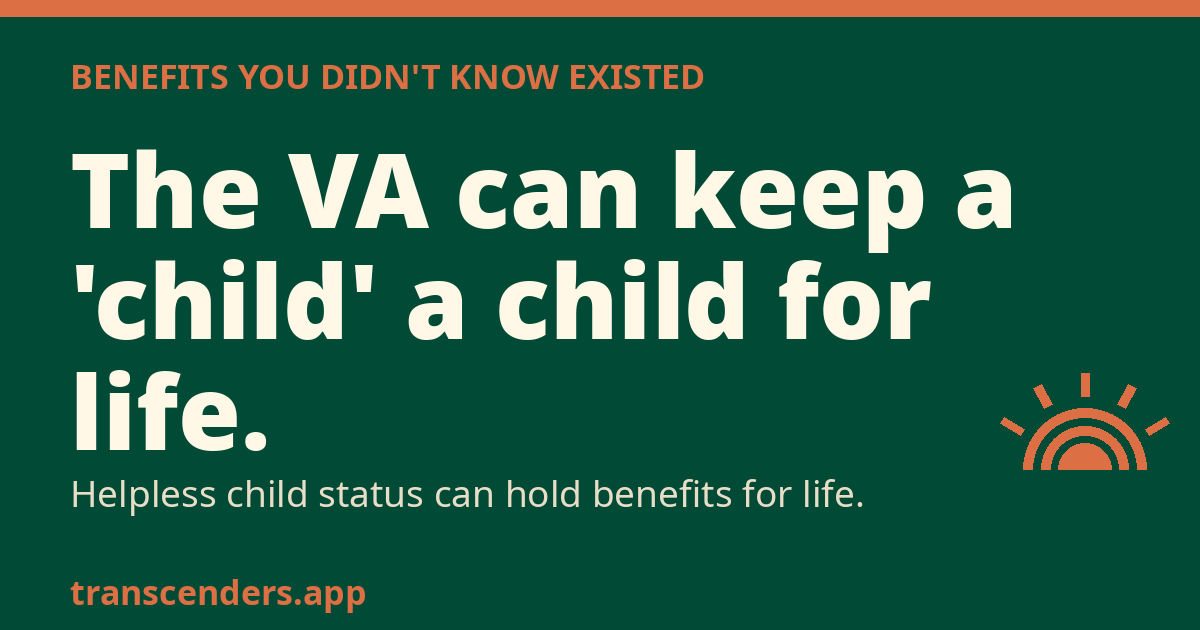
A veteran’s adult child can stay a “child” for VA benefits, for life
The VA has a category most veteran families never hear named: helpless child status. When a veteran’s child became permanently incapable of self-support before age 18, the VA can keep treating that person as the veteran’s child past 18, past 21, past every birthday that normally ends dependent benefits. That status can keep education benefits and health coverage within reach for an adult child who would otherwise age out of them. The catch is evidence: the case is built on records from before the eighteenth birthday, which is why families need to hear about it early, while the records are still easy to gather.
Go deeper: Veterans Families: Chapter 35 and Helpless Child Benefits
A disabled adult child can draw benefits on a parent’s work record
Social Security has a benefit many families miss entirely: Disabled Adult Child benefits, often called DAC. If a person’s disability began before age 22, they may qualify for a monthly benefit based on a parent’s earnings record once that parent retires, becomes disabled, or dies. The amount is based on the parent’s record, not the adult child’s own work history, and Medicare can follow. Families who have never heard of DAC cannot plan for it: the timing of a parent’s retirement claim can change what the whole household receives, so this one belongs in the conversation years before anyone files.
Go deeper: Turning 18: SSI and DAC at 18
Regional centers can fund the fun stuff: dance, swimming, sports, music
Here is the one that surprises almost every California family we meet. Regional center funding is not only for therapies and formal services. Social recreation, including activities like dance classes, swimming, sports leagues, and music lessons, can be part of a client’s plan and funded through the regional center, because play, friendship, and community are part of a life, not extras after the real services are done. Availability runs through the individual program plan, so the move is to ask the service coordinator directly and get the answer in writing. If your child has a list of things they love, that list is a funding conversation waiting to happen.
Go deeper: Start with the Family Navigator
The care you already give every day can be paid care
In-Home Supportive Services, IHSS, pays for care that helps a person stay safely at home: meals, bathing, transportation to appointments, paramedical tasks, and more. What families often do not know is that the person providing that care is frequently a family member, and IHSS can pay that family member as the provider. Hours are set by a county assessment, and some categories, including Protective Supervision for people who need watching around the clock to stay safe, surprise families who assumed their situation was just family life. If you are already doing the work, ask whether the work counts.
Go deeper: Start with the Family Navigator
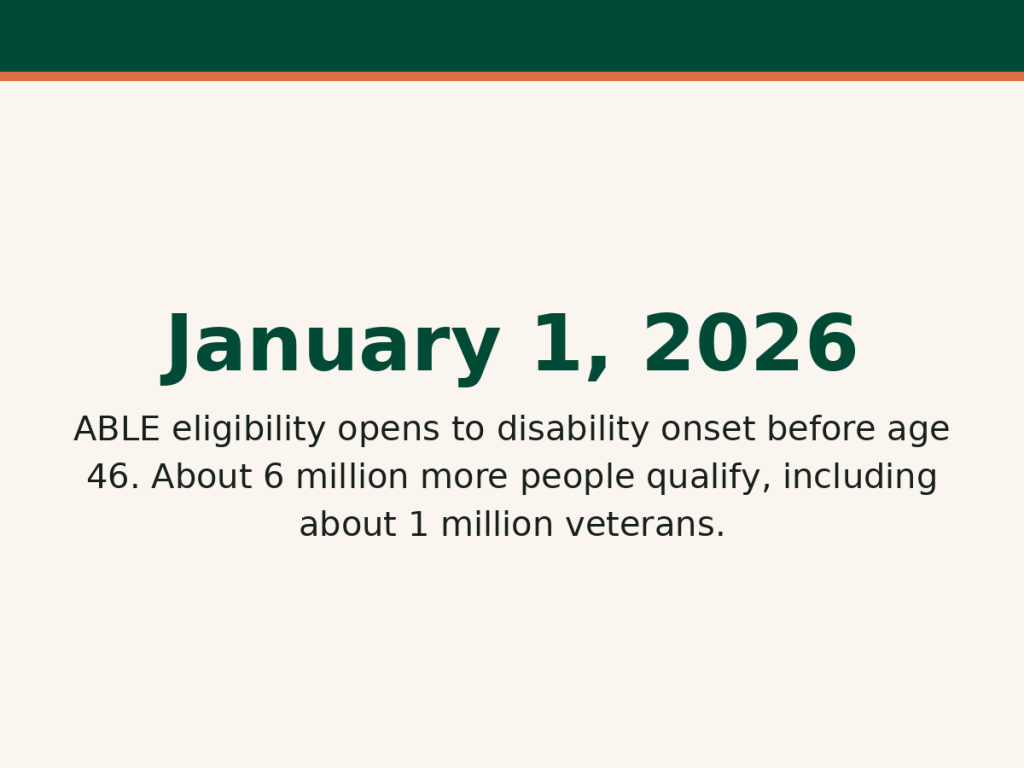
A CalABLE account lets savings grow without tripping the SSI limit the usual way
Saving money is normally dangerous for someone on SSI, because the resource limit is low and a regular bank account counts against it. A CalABLE account is the exception built for exactly this problem: money in the account can grow well past that limit (up to $100,000 of the balance is not counted for SSI), and it can be spent on qualified disability expenses, a broad list that includes housing, education, transportation, and assistive technology. For a young person with a first job, a birthday check from grandparents, or a settlement to protect, this account is often the difference between saving and being forced to spend down.
Go deeper: Special Needs Trusts and ABLE Accounts
You can ask the college for a bigger cost of attendance
Financial aid offers are built on a standard cost of attendance, and standard does not include what disability actually costs. Under California’s AB 2251, students with disabilities can ask for their cost of attendance to be adjusted upward for real expenses, such as personal assistance, specialized transportation, or equipment, and a bigger cost of attendance can mean a bigger aid offer. Almost nobody tells students this door exists. It opens with an ask, and our guide walks through how to make it.
Go deeper: Ask for a Bigger Cost of Attendance: A Family Guide to AB 2251
Real college programs exist for students with intellectual disability
Comprehensive Transition and Postsecondary programs, called CTP programs, are federally recognized college programs designed for students with intellectual disability. They are real college: classes, campus life, career preparation, and a credential, structured with the support these students actually need. Students in CTP programs can also qualify for forms of federal student aid that families assume are closed to them. For a teenager who has only ever heard one kind of college conversation, a CTP can change what the future looks like.
Go deeper: Veterans Families: College Benefits and CTP Programs
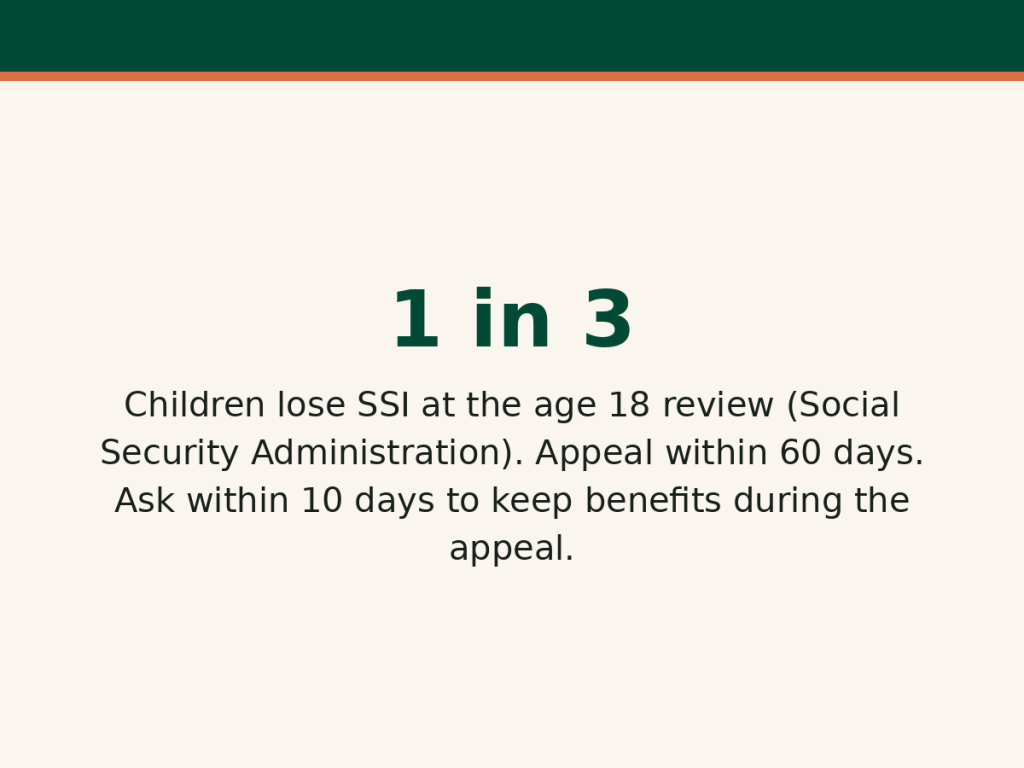
SSI gets reviewed again at 18, under a harder standard
If your child receives SSI now, the eighteenth birthday triggers a redetermination: Social Security reviews the case again under the adult disability rules, which are stricter than the childhood rules and ask whether the person can sustain work. Families who know the review is coming can gather the functional evidence ahead of time. Families who do not know often meet the adult standard for the first time in a denial letter. The checklist on our Turning 18 page tracks this review alongside the school, health, and legal changes that land in the same season.
Go deeper: Turning 18: The Checklist
Email me this checklist instead
Not sure which of this applies to your family?
That is the normal starting point, and it is exactly what the Family Navigator is for. Answer a few questions about your child and where you live, and the Navigator turns this list into a map for your family: what to gather, who to call, and what to ask for first.
Pass it on
Things Nobody Told You, live.
The webinar series is coming: live sessions with Tera Lisicky, M.Ed., each one ending with your questions. First up: Turning 18 With a Disability, the master checklist walkthrough. Then SSI at 18 and the DAC benefit. Then From Helpless Child to Chapter 35. Then AI as a College Accommodation. Dates are being scheduled now, and this list hears them first.
Join the webinar list:
Get one thing you did not know, every week
Join the list for this page and we will send one little-known benefit, deadline, or funding path at a time, in plain language, with the step to take while it still helps.